

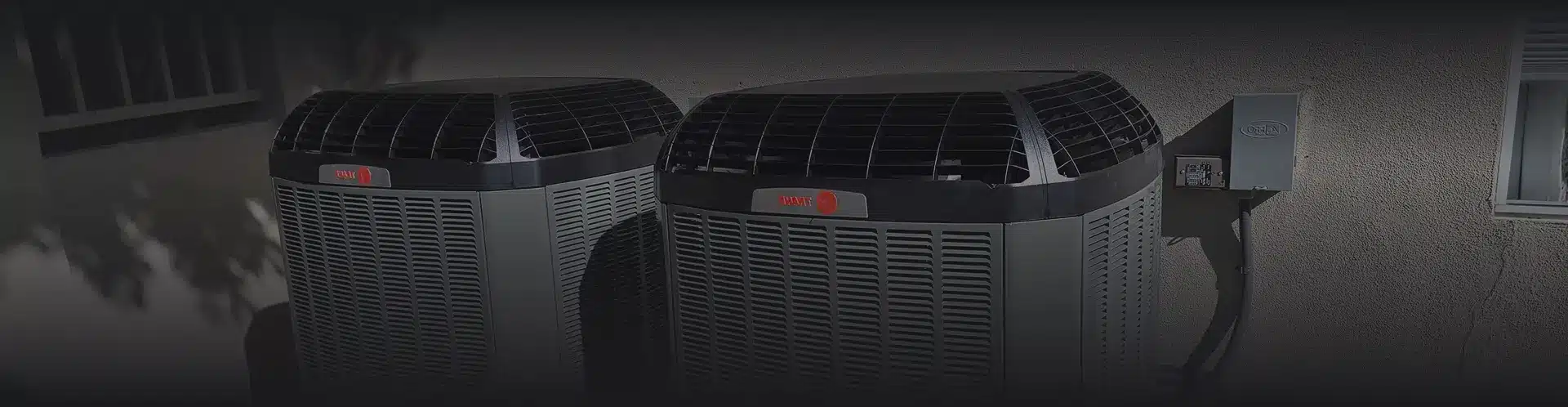
A haboob doesn’t announce itself with much warning in Peoria. One minute the sky is clear, and twenty minutes later a wall of dust is rolling in off the open desert to the northwest, coating everything in fine silt before the humidity hits. That one-two punch is what makes monsoon season genuinely hard on an AC system here. The unit that ran without complaint through June is suddenly fighting particulate-clogged coils and a moisture load it wasn’t sized to handle at the same time.
We’ve been doing this work in Arizona since before “monsoon prep” was a search term. Will has been in the HVAC industry since 2007, and State Forty Eight Home Comfort LLC has served Peoria-area homeowners since 2020. The pattern of what breaks, when it breaks, and why it breaks here is something we know well. What follows is what we actually tell our customers before and during monsoon season.
Why Monsoon Season Hits Peoria Differently
Peoria sits at the northwest edge of the Phoenix metro, where the urban grid gives way to open desert. That geography matters during haboob events: dust storms tracking northeast across open terrain reach Peoria before they reach more central parts of the metro, which means homeowners here get less warning before conditions go from clear to dangerous. That alone is a reason to prepare earlier rather than later.
There’s a second local factor that most general AC prep content ignores. Peoria’s proximity to Lake Pleasant generates localized humidity during monsoon season that runs higher than the broader Phoenix metro average. When those moisture surges arrive, condensate drain lines work harder than in drier parts of the valley. A drain that’s partially restricted but functional in dry conditions can back up completely during an active monsoon week.
Arizona’s official monsoon season runs June 15 through September 30, with the most intense activity concentrated between mid-July and mid-August. During that window, relative humidity can spike from below 15 percent to above 50 percent within a few hours. That sudden moisture load is what engineers call latent heat load: the energy your AC has to remove from the air as moisture rather than as temperature. Your system was sized for Peoria’s dry summer baseline. Monsoon changes the math without warning.
Before the Storms Arrive: Pre-Season AC Checks
If you’re reading this in early July, you still have time to prepare before the most active storm period begins. These steps matter most when done before the first major haboob of the season, not after.
Upgrade Your Filter to MERV 11 or Higher
Standard 1-inch filters rated below MERV 11 don’t block the fine particulate that haboobs carry. PM10 and PM2.5 particles (the size ranges that make haboob dust hazardous to breathe) pass through lower-rated filters and accumulate directly on evaporator coil surfaces. A MERV 11 filter captures PM10 effectively and provides meaningful improvement for finer particles; for the highest capture of PM2.5, a MERV 13 offers significantly better performance. Make the switch before the first storm, not after.
Clear Space Around the Outdoor Unit
The condenser needs at least two feet of clear space on all sides. Monsoon wind gusts regularly drive debris, branches, and accumulated dirt directly into the unit. Trim any vegetation that’s crept close since last summer and remove anything stored nearby. It takes less time to clear the area now than to clean a fouled condenser coil after the first storm hits.
Schedule a Professional Pre-Season Inspection
Before mid-July, have a technician inspect refrigerant levels, clean condenser coils, test the capacitor and contactor, and flush the condensate drain line. Capacitors and contactors are the components most likely to fail under monsoon stress, and they often show measurable degradation before they quit completely. Catching them during a maintenance visit is far less disruptive than diagnosing them during a 108-degree afternoon.
During the Season: What to Watch Between Storms
Monsoon maintenance isn’t a one-time event. The season runs three and a half months, and the conditions your system faces change week to week.
- Check filters every two to three weeks during active monsoon weeks. A haboob can load a filter so heavily that airflow drops to near zero within hours of the storm passing. A restricted filter starves the evaporator coil of airflow, which causes ice to form on the coil surface (a condition called evaporator freeze-up). When the ice melts, it can overwhelm the drain pan and cause water damage.
- Inspect the condensate drain pan under your air handler after any period of sustained humidity. Standing water in the pan means the drain line is blocked or restricted. A line that drains slowly in a dry month may not keep up during a humid monsoon week.
- Keep all interior vents open. Closing vents in unused rooms feels like it saves energy, but it increases static pressure inside the duct system. During monsoon, when the system is already running harder due to elevated humidity, higher static pressure compounds the strain on the blower motor and compressor.
After a Haboob: The Post-Storm Recovery Protocol
This is the step most homeowners skip, and it’s the one that causes the most preventable damage. The system needs attention after a major dust event, not just before the season starts.
Shut Down Before You Inspect
After a significant haboob, turn the system off at the thermostat before you do anything else. A heavy dust event can raise condenser head pressure by 10 to 15 percent when coil fouling is severe. Running the system hard immediately after a storm compounds that stress. Give yourself a few minutes to look at the outdoor unit before deciding whether to restart.
Rinse the Condenser Coil Fins
With the unit powered off at the breaker, rinse silt from the condenser coil fins using a garden hose. Use gentle pressure and spray from the inside out if you can access the interior. Never use a pressure washer on AC coil fins. The pressure flattens the fins, permanently reduces airflow, and partially defeats the purpose of cleaning.
Listen for New Symptoms Before Assuming Everything Is Fine
If the unit starts making unfamiliar sounds, cycles on and off more frequently than usual, or struggles to pull the temperature down after a storm, don’t wait to see if the problem resolves. Those are early signs of condenser fouling, refrigerant issues, or capacitor stress. Addressing them early is typically less expensive than calling for emergency service after the unit quits on a weekend afternoon.
Protecting Against Monsoon Electrical Threats
Monsoon thunderstorms are some of the most electrically active weather events in the country. Frequent lightning and the voltage surges that accompany rapid power fluctuations put real stress on HVAC electrical components, particularly compressor start capacitors, control boards, and variable-speed motor drives.
An HVAC-rated surge protector is a straightforward way to reduce the risk of control board failure and compressor damage from monsoon power events. If you’re not sure whether your system has one installed, ask your technician at your next maintenance visit. It’s a small investment relative to the cost of a control board replacement or a compressor.
When power goes out during a storm and comes back, wait five full minutes before restarting the AC. Compressors need that interval to equalize refrigerant pressure after a sudden shutdown. Restarting immediately forces the compressor to start against unequalized pressure, stressing the motor and the capacitor in ways that accumulate over time.
Managing Indoor Humidity When the AC Needs Help
There’s a misconception worth naming directly: because monsoon rain cools outdoor temperatures somewhat, some homeowners assume the AC gets a break during storms. It doesn’t. The humidity spike that arrives with the storm significantly increases the load on the system even as outdoor temperatures moderate slightly.
Arizona AC systems are designed and sized for sensible cooling in dry conditions, lowering air temperature. During monsoon, the system also has to remove substantial moisture from the air, which is latent cooling. When the moisture load exceeds what the system can handle efficiently, the home feels warm and clammy even when the thermostat reads the target temperature. According to ASHRAE Standard 55, the comfort threshold for indoor relative humidity falls between 30 and 60 percent. When outdoor humidity pushes indoor levels above that range, temperature alone isn’t the problem anymore.
A portable or whole-home dehumidifier supplements the AC by handling some of the latent load directly, letting the cooling system focus on temperature. Keeping windows and exterior doors closed during and after storms, including on cooler monsoon evenings, also helps prevent pulling humid outdoor air back inside after the system has worked to remove it.
The Long View: What Monsoon Prep Protects
Peoria AC units average about 11 years of service life, shorter than national averages because of the heat and dust environment they operate in. A unit that runs two or three monsoon seasons with fouled coils, a partially blocked condensate drain, and no surge protection may not reach that mark in good condition. The damage compounds: coil fouling that doesn’t get cleaned after July’s haboobs runs through August and September, and a capacitor that’s borderline in August doesn’t get better by October. It shows up in energy bills and repair calls for years after.
Preparing the system before peak storm activity, checking it between storms, and running a post-haboob inspection when conditions call for it is how you work to protect the years you have left in that unit. If a storm catches your system off guard and you need a same-day or weekend appointment, State Forty Eight Home Comfort LLC is available for exactly that. Give us a call at (602) 584-2141.